Courtney Donovan
23+ year travel industry veteran · May 28, 2026
The question every plus size woman asks before she books a flight. And it is one of the hardest to get a straight answer to, because the old advice is no longer current. Here is the honest version, updated for 2026.
What Changed in 2026
Two big things shifted the plus size flying landscape this year and both matter for who you book.
Southwest changed their policySouthwest changed their Customer of Size policy on January 27, 2026. For decades, Southwest was the closest thing plus size travelers had to a real ally in U.S. aviation. That ended on January 27. Plus size travelers now have to proactively purchase a second seat at booking. Since the January change, plus size travelers have reported humiliating encounters with gate agents and surprise fees in the hundreds of dollars. QCC does not recommend Southwest under the new policy.
Spirit shut downSpirit Airlines shut down on May 2, 2026. After two bankruptcies in nine months, they ceased operations. The Spirit Big Front Seat that used to be a quiet plus size win is gone. Do not book Spirit. They do not exist.
The U.S. Domestic List
 Alaska Airlines: The closest thing to the old Southwest experience. They still refund the extra seat when the flight departs with empties and their policy is straightforward. If Alaska serves your route, price them first.
- JetBlue: Runs some of the wider economy seats in the industry, 17 to 18 inches across with 32 to 34 inches of pitch on most aircraft. Their Even More Space option adds legroom up to 38 inches for a modest upgrade fee.
- Delta: Does not require extra seat purchase for domestic flights. Delta crews are known to reseat plus size travelers next to empty seats when the flight has room. Their Comfort+ cabin is a meaningful step up from standard economy on longer domestic routes.
- Hawaiian Airlines: Historically run slightly roomier economy seats than most U.S. domestic carriers. If you are flying to or through Hawaii, they are usually the most comfortable option on the route.
- Breeze Airways: Newer and worth knowing. Founded by the same person who started JetBlue, Breeze focuses on underserved routes and flies newer A220 aircraft. Their Nicest seat is 20.5 inches wide with 39 inches of pitch. If Breeze serves a city pair you are flying, pricing the Nicest seat is one of the best comfort to dollar plays in the U.S. right now.
The International List
- Air Canada: Has the strongest plus size policy in North America under the Canadian One Person One Fare rule, but only for flights within Canada. Canadian domestic legs qualify for a complimentary second seat with physician documentation submitted at least 48 hours before travel.
- KLM: Offers a Customer of Size policy with 25 percent off a second seat at booking plus reimbursement if a seat is empty in the same class at takeoff. Easier than Southwest's new policy and a strong European hub network.
- Emirates: Economy is more generous than most U.S. carriers and their long haul service standards are consistently high. If Emirates serves your international route, check them before defaulting to a U.S. carrier flying the same path.
- Singapore Airlines: Consistently rated among the best in the world. Their cabin design and service make long haul travel significantly more manageable in economy than most carriers.
One Aircraft Tip Worth Twenty Minutes
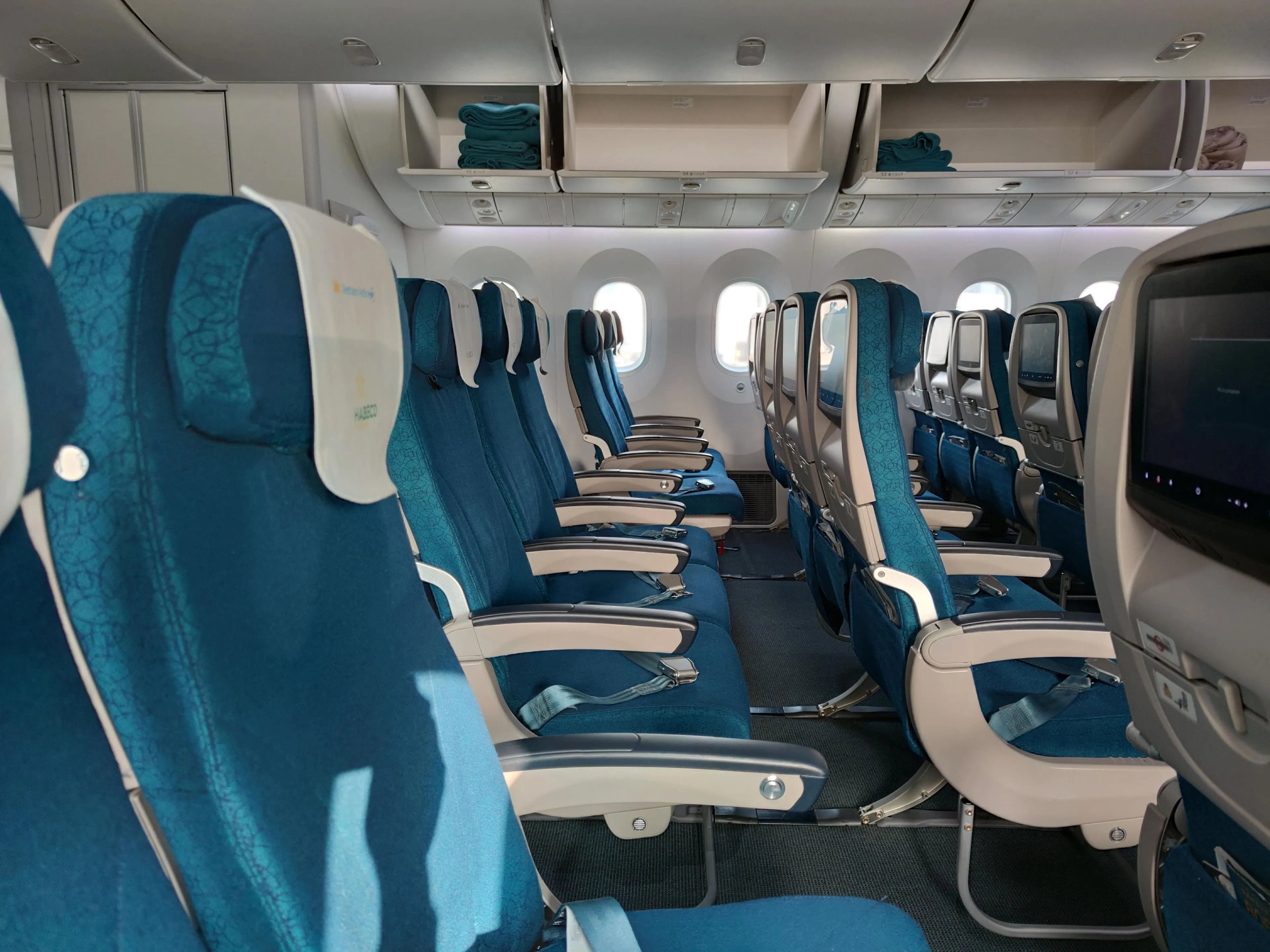
The aircraft mattersTwo specific aircraft are noticeably more comfortable for plus size travel: the Boeing 787 Dreamliner and the Airbus A350. Both are newer wide body designs with better seat dimensions, lower cabin pressure and higher humidity. When you have a route choice, picking the flight on the 787 or A350 over an older 777 or A330 is a real difference, not a marketing detail.
When to Buy the Second Seat
- If you are unsure whether one seat works on the specific aircraft, buy the second seat. It is better to have it and not need it than need it and not have it.
- If you are in between sizes on a short domestic under two hours, standard economy is usually workable. Check the aircraft configuration first.
- If the flight is over two hours, price the upgrade. The difference between an uncomfortable flight and a manageable one is often thirty to fifty dollars.
- If the flight is international long haul, price business class first. If it is out of range, look at premium economy. Arriving exhausted after ten or more hours affects the first two days of your trip.