Courtney Donovan
23+ year travel industry veteran · May 27, 2026
Lisbon is one of the most beautiful cities in Europe. It is also a city built on seven steep hills paved with smooth limestone cobblestones. That combination is the single biggest thing nobody tells you before you book. The good news is that plus size and accessible travel in Lisbon absolutely works, with the right neighborhoods, the right transport choices and a realistic plan.
The Honest Answer
Lisbon will not be the easiest European city you visit and it is far from the hardest. The historic charm comes with steep hills and narrow cobbled sidewalks and the most photographed neighborhoods are also the least mobility friendly. Stay in the flat parts and use modern transport and Lisbon opens up. Try to do too much of Alfama and Bairro Alto on foot and the trip turns into a fight you do not need.
Two Things to Know Before You Book
 The cobblestones. The famous polished limestone is called calçada portuguesa. It is pretty and it is slick when wet. Bring shoes with real grip.
- The hills. Seven of them and they are real hills. Look closely at where your hotel is in relation to where you want to be each day. A flat half mile is one kind of trip. An uphill half mile is another.
The Best Neighborhoods to Stay In
- Baixa: The downtown grid is the flattest part of central Lisbon. Wide pedestrian streets, easy walking, every major line of transport runs through it. The default smart base.
- Belém: A flat riverside neighborhood where the Jerónimos Monastery and the Belém Tower live. Quieter than central Lisbon with modern accessible trams running in from the city.
- Parque das Nações: Built flat from scratch for the 1998 World Expo. Wide smooth promenades, modern hotels, accessible cable cars. The easiest neighborhood to move around in the whole city.
Getting Around Comfortably
- Skip the famous Tram 28. The picture postcard tram has three steps to board and gets packed body to body. The romance is real, the comfort is not.
- Take modern trams and buses instead. Look for the blue disabled badge by the door. Tram 15E runs along the waterfront from the centre out to Belém and is fully accessible.
- Use ride share. Uber and Bolt are everywhere in Lisbon, often cheaper than taxis and they save you the long uphill walk back to the hotel at the end of a day.
- One current note as of 2026: all three traditional funicular lines remain suspended following the Glória line accident. The Graça funicular reopened April 30, 2026. Plan around them rather than counting on them.
What to Do, Comfortably
- Belém in one easy day. The Jerónimos Monastery, the Belém Tower, the MAAT museum and the original Pastéis de Belém pastry shop sit on flat ground within walking distance of each other along a wide promenade.
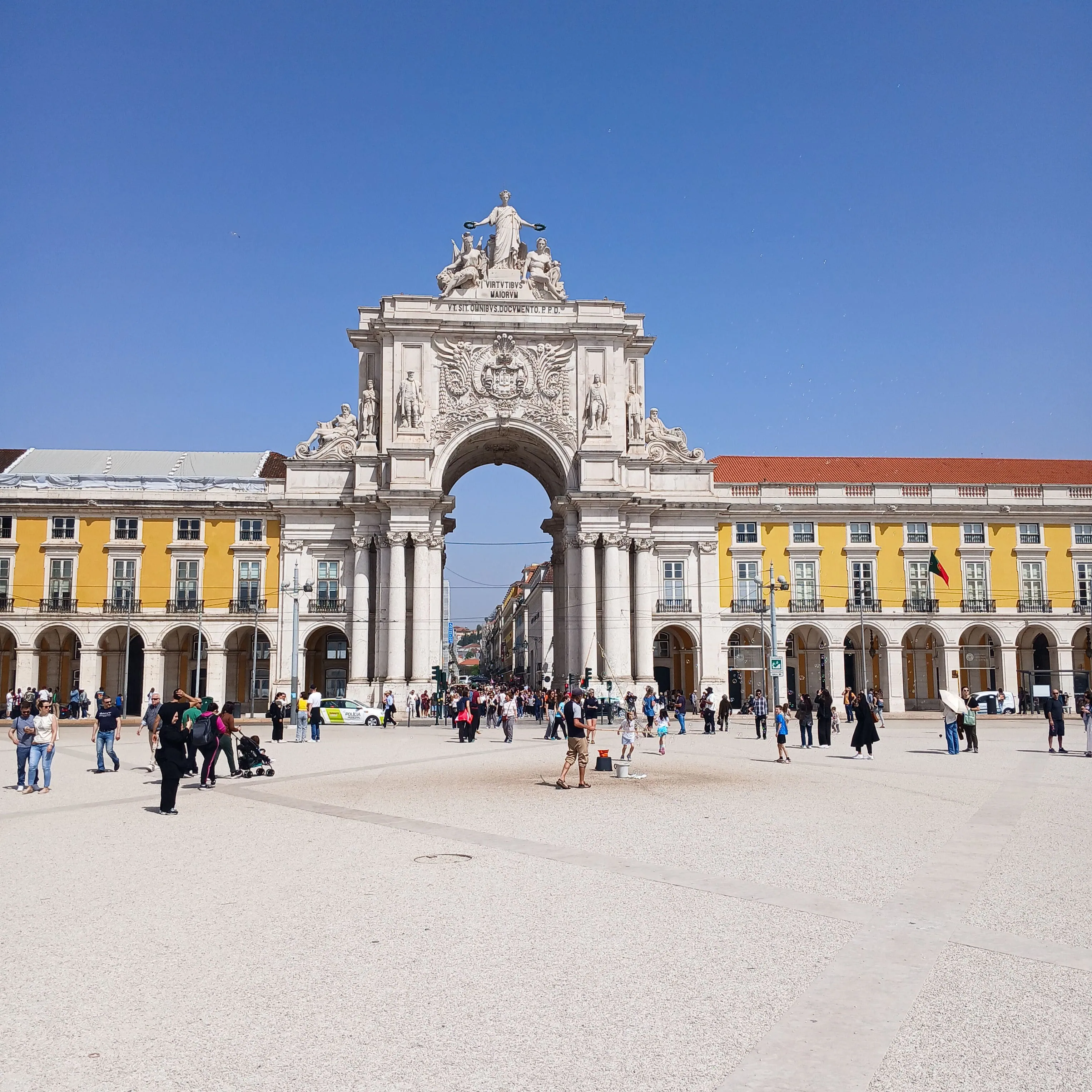
- Praça do Comércio and the Baixa grid. Flat, photogenic, easy to wander. The big square opens onto the river and the streets behind it are mostly pedestrian.
- The National Tile Museum. One of Lisbon's most loved museums and step free inside.
- Parque das Nações. Ride the accessible cable car along the river, walk the wide flat promenade.
- Miradouro de São Pedro de Alcântara has bus access and a public elevator nearby, meaning a top tier viewpoint without the climb.
Where to Eat
- Time Out Market at Cais do Sodré is a huge covered food hall. Open and flat inside, easy seating, no commitment to one restaurant for a full meal.
- Pastéis de Belém is the original custard tart shop. Worth the trip. Large dining room inside with regular chairs.
- For sit down meals, look in Baixa and Belém first. A quick check of reviews or a short call ahead saves an awkward surprise at the door.
Day Trips
- Cascais: A flat coastal town a short train ride west of Lisbon. Long promenade, beaches, easy walking. The most accessible day trip from the city.
- Sintra: Famously beautiful, famously hilly. The palaces sit on top of a mountain reached by a winding shuttle bus. If Sintra is on your list, plan it as one focused day and pick one or two sites rather than trying to do them all.