Plus Size and Accessible Travel in Lisbon
Lisbon is one of the most beautiful cities in Europe. It is also a city built on seven steep hills paved with smooth limestone cobblestones. That combination is the single biggest thing nobody tells you before you book. The good news is that plus size and accessible travel in Lisbon absolutely works, with the right neighborhoods, the right transport choices and a realistic plan. Here is what to know before you go.
The honest answer
Lisbon will not be the easiest European city you visit, and it is far from the hardest. The historic charm comes with steep hills and narrow cobbled sidewalks, and the most photographed neighborhoods are also the least mobility friendly. Stay in the flat parts and use modern transport, and Lisbon opens up. Try to do too much of Alfama and Bairro Alto on foot and the trip turns into a fight you do not need.
Two things to know before you book
First, the cobblestones. The famous polished limestone is called calçada portuguesa. It is pretty, and it is slick when wet. Bring shoes with real grip. Wheelchair users and anyone with balance concerns should plan around the weather, since even a mild incline can lose traction in the rain.
Second, the hills. Seven of them, and they are real hills. The historic neighborhoods sit on top of them. Look closely at where your hotel is in relation to where you want to be each day. A flat half mile of cobbles is one kind of trip. An uphill half mile is another.
The best neighborhoods to stay in
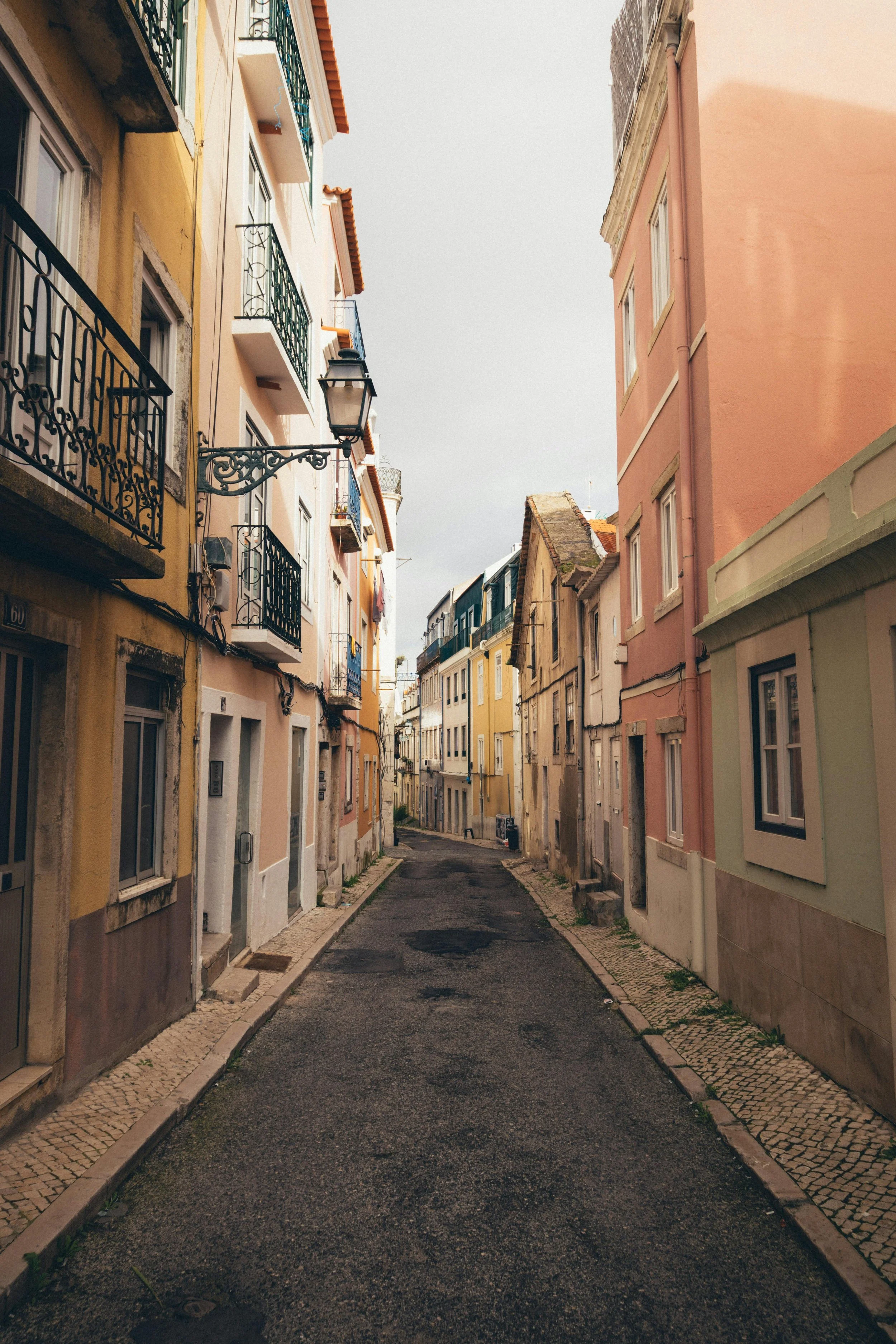
A historic street scene in Lisbon with traditional architecture.
Baixa, the downtown grid, is the flattest part of central Lisbon. Wide pedestrian streets, easy walking, every major line of transport runs through it. This is the default smart base for plus size and accessible travel.
Belém is a flat riverside neighborhood where the Jerónimos Monastery and the Belém Tower live. Quieter than central Lisbon, with modern accessible trams running in from the city.
Parque das Nações was built flat from scratch for the 1998 World Expo. Wide smooth promenades, modern hotels, accessible cable cars. The easiest neighborhood to move around in the whole city, and a strong pick if comfort is your top priority.
Avoid as your base if mobility matters: Alfama and Bairro Alto. Both are stunning. Both are also built almost entirely of stairs, hills and narrow cobbled lanes. Visit them in short focused trips, do not sleep in them.
Getting around comfortably
Skip the famous Tram 28. The picture postcard tram has three steps to board and gets packed body to body. The vintage cars are not accessible. The romance is real, the comfort is not.
Take modern trams and buses instead. The yellow Carris buses are mostly modern, ramped and lifted. Look for the blue disabled badge by the door. Tram 15E runs along the waterfront from the centre out to Belém and is fully accessible.
Use ride share. Uber and Bolt are everywhere in Lisbon, often cheaper than taxis, and they save you the long uphill walk back to the hotel at the end of a day.
Use the elevators. Lisbon has public elevators that connect lower streets to higher ones. The Santa Justa Lift is the famous one. The smaller Elevador Castelo and Elevador da Baixa let you skip serious climbs that would otherwise eat your day.
One current note as of 2026: all three of Lisbon's traditional funicular lines remain suspended following the Glória line accident. Plan around them rather than counting on them. Check current status before you go.
What to do, comfortably
Belém in one easy day. The Jerónimos Monastery, the Belém Tower, the MAAT museum and the original Pastéis de Belém pastry shop sit on flat ground within walking distance of each other along a wide promenade. This is the easiest full day in Lisbon.
Praça do Comércio and the Baixa grid. Flat, photogenic, easy to wander. The big square opens onto the river and the streets behind it are mostly pedestrian.
The National Tile Museum, the Museu Nacional do Azulejo. One of Lisbon's most loved museums and step free inside. Tiles are the city's signature art.
Parque das Nações. Ride the accessible Telecabine cable car along the river, walk the wide flat promenade, eat lunch by the water.
The viewpoints. Lisbon's miradouros are postcard famous. Many sit on top of steep climbs in Alfama, but Miradouro de São Pedro de Alcântara has bus access and a public elevator nearby, which means a top tier viewpoint without the climb.
Where to eat
Time Out Market at Cais do Sodré is a huge covered food hall with dozens of stalls under one roof. Open and flat inside, easy seating, no commitment to one restaurant for a full meal. A genuinely comfortable option for any plus size or accessible traveler.
Pastéis de Belém is the original custard tart shop. Worth the trip. Large dining room inside with regular chairs.
For sit down meals, look in Baixa and Belém first. Many historic Lisbon restaurants have a step or two at the door and tight quarters inside. A quick check of reviews or a short call ahead saves an awkward surprise at the door.
Day trips
Cascais. A flat coastal town a short train ride west of Lisbon. Long promenade, beaches, easy walking. The most accessible day trip from the city.
Sintra. Famously beautiful, famously hilly. The palaces sit on top of a mountain reached by a winding shuttle bus, and the grounds involve steep walking and many steps. If Sintra is on your list, plan it as one focused day, use the tourist buses to move between palaces rather than walking, and pick one or two sites rather than trying to do them all.
A note for plus size travelers specifically
Most public seating in Lisbon, restaurants, buses, the Time Out Market, is standard armless chair or bench. Generally workable. Older trams and a few historic restaurants have tight seating and narrow aisles, which is another reason to favor modern transport and newer venues. Hotel rooms in the historic centre can be small, so when you book, look at room photos and ask the hotel about bathroom size if accessibility is a concern.
The short version
Pick a flat base in Baixa, Belém or Parque das Nações. Use the modern buses, the accessible 15E tram and ride share for the hills. Save Alfama and Bairro Alto for one focused photo walk rather than a daily route. Bring shoes with real grip. With that plan, plus size and accessible travel in Lisbon is rich, slow, comfortable and full of food, history, river views and the best pastries on the continent.
More from TravEndex and QCC
For more on travel like this, the TravEndex Suite goes deeper into every part of the trip. Try DestEndex for destination details, AirEndex for flight comfort, HealthEndex for travel health basics and InsurEndex for travel insurance.
Want guides like this in your inbox? Become a QCC VIP and get a new spotlight every week!